

Step-by-Step Guide to Placing IRA Funds in Conservative Investments
Retirement planning requires a delicate balance between growth potential and capital preservation. According to the Investment Company Institute, individual retirement accounts held over $1 million in assets as of recent reporting periods, highlighting the significant volume of capital seeking secure placement. For many investors, the primary goal shifts from aggressive accumulation to steady preservation as retirement approaches. This guide details the precise mechanisms for moving IRA funds into conservative investment vehicles while maintaining tax advantages and regulatory compliance.
Understanding Conservative IRA Assets
Before initiating any transaction, it is crucial to define what constitutes a conservative investment within the context of an Individual Retirement Account. Conservative investments are designed to minimize the risk of loss while providing a steady, albeit modest, return. These assets typically exhibit low volatility and high liquidity.
High-yield savings accounts are a foundational component of conservative portfolios. These accounts offer interest rates that generally track with federal monetary policy, providing a safe harbor for cash reserves. Certificates of Deposit, or CDs, are another staple. A Certificate of Deposit is a time-bound savings product that guarantees a fixed interest rate for a specified period, ensuring principal protection up to FDIC limits. (About)
Treasury securities represent the gold standard for safety. A Treasury Bond is a loan made by an investor to the U.S. government that pays fixed interest payments at regular intervals until maturity. These instruments are backed by the full faith and credit of the U.S. government, making them virtually risk-free regarding default. Municipal bonds also play a role, particularly for investors in higher tax brackets, as the interest earned is often exempt from federal income tax.
Evaluating Your Risk Profile
Placing funds into conservative assets is not a one-size-fits-all decision. Your current age, time horizon, and financial goals dictate the appropriate allocation. The American Gulf team emphasizes that a sudden shift to overly conservative positions can expose investors to inflation risk. If your returns do not outpace inflation, your purchasing power erodes over time.
Consider the sequence of returns risk. This is the danger that poor market performance early in retirement forces you to sell assets at a loss to cover living expenses. By holding conservative investments, you create a buffer that allows your growth assets to recover without being liquidated during a downturn. This strategy is particularly vital for those within five years of retirement.
Assess your liquidity needs. Do you require immediate access to these funds for healthcare emergencies or home repairs? If so, short-term CDs or money market funds within your IRA may be more suitable than long-term Treasury bonds, which may incur penalties for early withdrawal. Understanding these nuances ensures that your conservative allocation supports your lifestyle rather than hindering it.
Selecting the Right Vehicle
Not all IRAs are created equal. The type of IRA you hold determines the tax implications of your conservative investments. Traditional IRAs offer tax-deductible contributions and tax-deferred growth, but withdrawals are taxed as ordinary income. Roth IRAs provide tax-free growth and tax-free withdrawals in retirement, but contributions are made with after-tax dollars.
For conservative investors, the Roth IRA often presents a strategic advantage. Since the investments are low-risk, the tax savings from a Traditional IRA deduction may be less valuable than the tax-free growth potential of a Roth. If you expect your tax rate to be higher in retirement, a Roth is generally preferred. Conversely, if you need immediate tax relief, a Traditional IRA might be the better fit.
Consider the investment minimums and fees. Some brokerage firms require minimum balances for certain Treasury auctions or high-yield savings products. American Gulf provides transparent fee structures to ensure that your conservative returns are not eroded by administrative costs. Always compare the expense ratios of any mutual funds or ETFs you consider, as even small differences compound significantly over decades.
Executing the Transfer
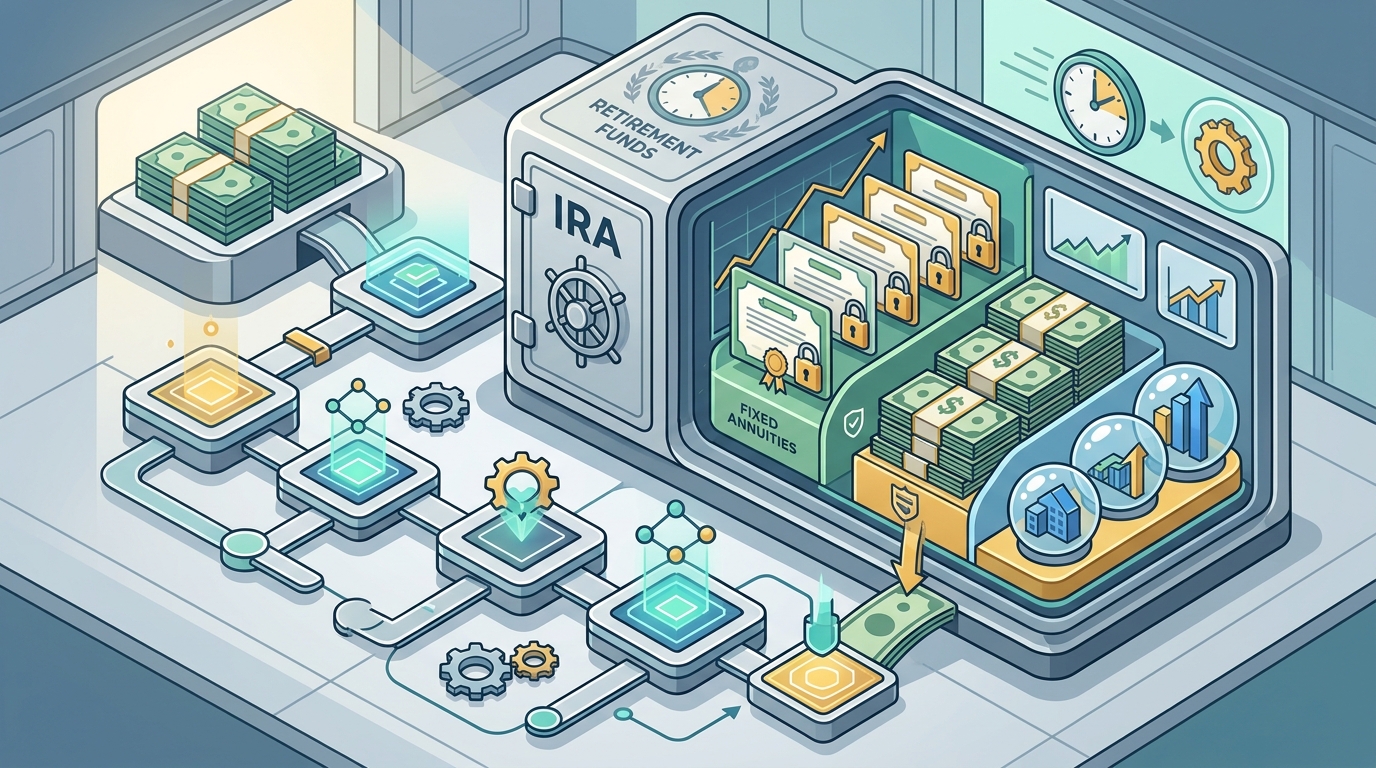
Once you have selected your assets and IRA type, the execution phase begins. This process involves moving funds from your current holding to the new conservative investment. There are two primary methods: a direct transfer and a rollover.
A direct transfer, also known as a trustee-to-trustee transfer, is the safest and most efficient method. In this scenario, the funds move directly from one financial institution to another. You never touch the money, which eliminates the risk of missing the 60-day deadline for rollovers. This method is ideal for moving funds between IRAs or into new conservative instruments.
If you must take possession of the funds, a 60-day rollover is an option. However, this carries significant risk. The IRS requires that you deposit the funds into a new qualified account within 60 days. Failure to do so results in the distribution being treated as taxable income, potentially incurring early withdrawal penalties if you are under age 59 and a half. For most investors, avoiding this method is advisable.
Document everything. Keep records of all transfer confirmations, account statements, and correspondence with your financial institution. These documents are essential for tax reporting and resolving any potential disputes with the IRS. American Gulf ensures that all transfer processes are tracked and verified to maintain the integrity of your retirement portfolio.
Monitoring and Rebalancing
Placing funds in conservative investments is not a set-and-forget strategy. Market conditions change, interest rates fluctuate, and your personal circumstances evolve. Regular monitoring ensures that your portfolio remains aligned with your goals.
Watch interest rate trends. When the Federal Reserve raises rates, new CDs and savings accounts offer higher yields. If you have existing low-yield CDs, consider laddering your maturities to capture these higher rates as they come due. A CD ladder involves purchasing CDs with staggered maturity dates, providing regular liquidity and exposure to changing interest rates.
Review your asset allocation annually. As your retirement date approaches, you may need to increase your conservative allocation. Conversely, if you have a longer time horizon, you might maintain a slightly higher growth component. Rebalancing involves selling assets that have grown too large and buying those that have shrunk, restoring your target allocation. This disciplined approach prevents your portfolio from becoming too aggressive or too conservative unintentionally.
Stay informed about tax law changes. Legislation can impact the deductibility of Traditional IRA contributions or the eligibility for Roth conversions. Staying updated ensures that your conservative strategy remains tax-efficient. American Gulf provides regular market updates and tax insights to help you make informed decisions.
Key Takeaways
- Conservative investments prioritize capital preservation over high growth, reducing volatility in your retirement portfolio.
- Direct trustee-to-trustee transfers are the safest method for moving IRA funds, avoiding the 60-day rollover risk.
- Roth IRAs may offer superior long-term benefits for conservative investors due to tax-free withdrawals.
- CD laddering can help capture rising interest rates while maintaining liquidity.
- High-yield savings accounts provide FDIC-insured safety with immediate access to funds.
- Treasury bonds are backed by the U.S. government, offering virtually no default risk.
- Regular rebalancing ensures your portfolio stays aligned with your changing risk tolerance and time horizon.
Frequently Asked Questions
Can I hold physical gold in my IRA?
Yes, a Self-Directed IRA allows you to hold physical precious metals, including gold, provided they meet IRS purity standards and are stored in an approved depository. This option offers diversification but requires careful management of storage fees and liquidity.
What is the penalty for early withdrawal from a Traditional IRA?
Withdrawals before age 59 and a half typically incur a 10% early withdrawal penalty plus ordinary income tax on the distributed amount. Exceptions exist for first-time home purchases, higher education expenses, and certain medical costs.
How do I choose between a Traditional and Roth IRA for conservative investments?
Choose a Traditional IRA if you need immediate tax deductions and expect to be in a lower tax bracket in retirement. Choose a Roth IRA if you prefer tax-free withdrawals and expect to be in a higher tax bracket later, or if you want to avoid required minimum distributions.
Are money market funds in an IRA safe?
Money market funds are not FDIC-insured, but they are considered very low risk and highly liquid. They invest in short-term, high-quality debt instruments. However, they do not guarantee the preservation of principal like a bank savings account or CD.
Can I convert my Traditional IRA to a Roth IRA?
Yes, you can convert a Traditional IRA to a Roth IRA at any time. The converted amount is taxable as ordinary income in the year of conversion. This strategy can be beneficial if you anticipate higher future tax rates or want to eliminate required minimum distributions.
What are required minimum distributions (RMDs)?
RMDs are mandatory withdrawals from Traditional IRAs starting at age 73 (under current SECURE 2.0 Act rules). Roth IRAs do not require RMDs during the original owner's lifetime, making them attractive for estate planning.
How does inflation affect conservative IRA investments?
Inflation erodes the purchasing power of fixed-income investments. If your conservative returns do not outpace inflation, your real wealth decreases. Treasury Inflation-Protected Securities (TIPS) can help mitigate this risk by adjusting principal based on CPI changes.
Secure Your Retirement with American Gulf
Transitioning your IRA funds to conservative investments is a critical step in protecting your financial future. At American Gulf, we specialize in guiding clients through complex retirement planning decisions with precision and care. Our team provides personalized strategies tailored to your unique financial landscape, ensuring your assets are positioned for stability and growth. Contact us today to schedule a consultation and take control of your retirement destiny. Visit our contact page to begin your journey toward financial security.